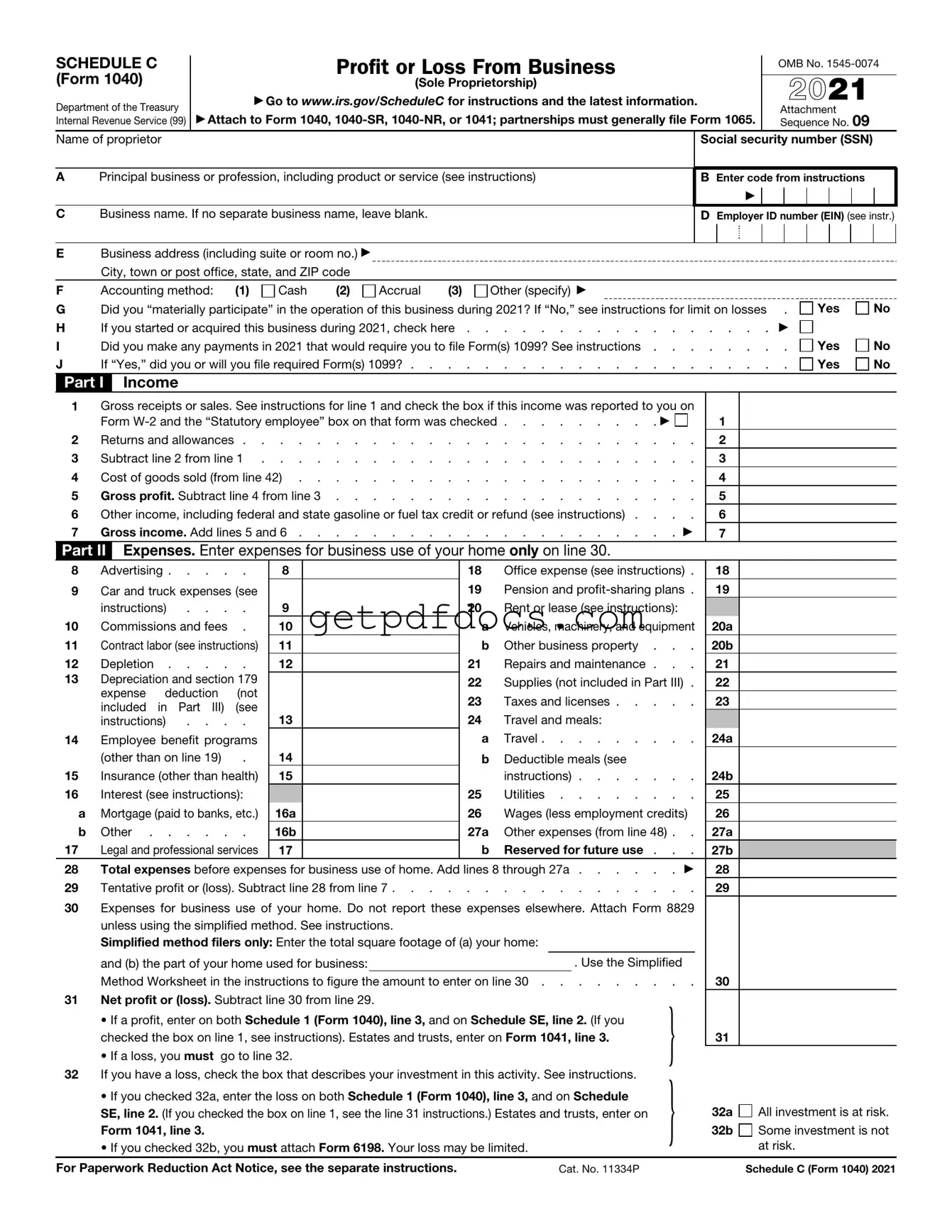
Fill in a Valid IRS Schedule C 1040 Template
The IRS Schedule C form is a crucial document for many individuals who operate their own businesses or engage in self-employment. This form, officially known as "Profit or Loss from Business," allows taxpayers to report income and expenses related to their business activities. Completing Schedule C is essential for accurately calculating net profit or loss, which ultimately impacts the total income reported on the individual’s Form 1040. The form requires detailed information about business income, including sales, services provided, and other revenue sources. Additionally, it encompasses various expenses, such as costs for supplies, advertising, and travel, which can significantly reduce taxable income. Understanding how to fill out Schedule C correctly is vital, as it not only ensures compliance with IRS regulations but also maximizes potential deductions. As self-employment continues to grow, knowing how to navigate this form can empower business owners to take control of their financial reporting and tax obligations.
How to Use IRS Schedule C 1040
Filling out the IRS Schedule C (Form 1040) is an important step for self-employed individuals reporting income and expenses from their business. Accurate completion of this form helps ensure compliance with tax regulations and can affect your overall tax liability. Follow these steps to fill out the form correctly.
- Gather your business records, including income statements, expense receipts, and any other relevant documentation.
- Obtain the IRS Schedule C form from the IRS website or your tax preparation software.
- Fill in your name and Social Security number at the top of the form.
- Provide your business name and address in the appropriate sections.
- Indicate your business's principal activity by selecting the most appropriate category from the provided list.
- Enter your gross receipts or sales in Part I, Line 1. This includes all income received from your business activities.
- Deduct any returns and allowances in Line 2, if applicable, and calculate your net income in Line 7.
- Move to Part II to list your business expenses. Fill in each applicable category such as advertising, car and truck expenses, and supplies.
- Calculate the total expenses in Line 28 and subtract this from your gross income to determine your net profit or loss.
- Complete Part III if you have a business with inventory. Report the beginning and ending inventory amounts.
- Sign and date the form at the bottom before submitting it to the IRS.
Once you have completed the form, review it for accuracy. Keep a copy for your records, as you may need it for future reference or in case of an audit. Filing this form on time is essential to avoid penalties.
Key takeaways
Filling out the IRS Schedule C (Form 1040) can be a straightforward process if you keep a few key points in mind. Here are some essential takeaways to help you navigate this form effectively:
- Understand the Purpose: Schedule C is used to report income and expenses from a sole proprietorship. It helps determine your net profit or loss from your business activities.
- Gather Documentation: Before you start, collect all relevant financial documents. This includes income statements, receipts for expenses, and any other records that support your claims.
- Report All Income: Ensure you report all income earned from your business. This includes cash, checks, and any other forms of payment received during the tax year.
- Deductible Expenses: Familiarize yourself with what qualifies as a deductible expense. Common deductions include operating expenses, supplies, and business-related travel costs.
- Home Office Deduction: If you work from home, you may qualify for a home office deduction. Be sure to meet the requirements to claim this deduction accurately.
- Keep Accurate Records: Maintain organized records of all income and expenses throughout the year. This will make it easier to fill out Schedule C and support your claims if needed.
- Review and Double-Check: After completing the form, review it thoroughly for any errors. Mistakes can lead to delays or issues with the IRS.
- Seek Help if Needed: If you find the process overwhelming, consider consulting a tax professional. They can provide guidance and ensure you maximize your deductions.
By following these takeaways, you can simplify the process of completing Schedule C and ensure you are accurately reporting your business income and expenses.
Common mistakes
Filling out the IRS Schedule C (Form 1040) can be a daunting task for many small business owners and self-employed individuals. Even minor errors can lead to delays, audits, or penalties. Here are eight common mistakes to avoid when completing this important form.
One frequent mistake is failing to report all income. It’s crucial to include every dollar earned from your business. This includes cash payments and income from side gigs. Omitting even a small amount can raise red flags with the IRS.
Another common error is mixing personal and business expenses. Keeping your finances separate is essential. Personal expenses should not be claimed as business deductions. This not only complicates your records but can also lead to penalties if audited.
Many people also overlook accurately categorizing expenses. Each expense should be placed in the correct category. Misclassifying expenses can lead to incorrect deductions and potential issues with the IRS.
In addition, some filers forget to include necessary documentation. Supporting documents, such as receipts and invoices, are vital for substantiating your claims. Without them, you may struggle to defend your deductions if questioned by the IRS.
Another mistake is not taking advantage of all available deductions. Many self-employed individuals miss out on valuable deductions, such as home office expenses or vehicle costs. Familiarizing yourself with what you can claim can significantly reduce your tax burden.
Additionally, neglecting to keep accurate records can lead to problems down the line. Regularly updating your financial records makes filling out Schedule C much easier and helps ensure you don’t miss any important details.
Some people also fail to double-check their math. Simple arithmetic errors can lead to incorrect income reporting or deductions. Taking a moment to review your calculations can save you from unnecessary headaches.
Finally, be cautious about missing deadlines. Late submissions can result in penalties and interest on unpaid taxes. It’s essential to stay organized and file on time to avoid these additional costs.
By being aware of these common pitfalls, you can navigate the Schedule C form with greater confidence and accuracy. Take the time to review your entries carefully, and don’t hesitate to seek professional help if needed.
Documents used along the form
When filing your taxes as a self-employed individual or a small business owner, the IRS Schedule C (Form 1040) is an essential document. However, it is often accompanied by other forms and documents that help provide a complete picture of your financial situation. Below is a list of commonly used forms that may be necessary alongside Schedule C.
- Form 1040: This is the standard individual income tax return form. It summarizes your overall income, deductions, and tax liability. Schedule C is attached to this form to report business income and expenses.
- Schedule SE: This form is used to calculate self-employment tax. If you earn more than a certain amount from self-employment, you need to file this form to determine how much you owe for Social Security and Medicare taxes.
- Florida Traffic Crash Report: In the event of a traffic incident in Florida, drivers should complete the https://floridaforms.net/blank-florida-traffic-crash-report-form/ to document details of the crash, especially when a law enforcement report is not available.
- Form 4562: This form allows you to claim depreciation on your business assets. If you purchase equipment or property for your business, you can use this form to spread the cost over several years.
- Form 8829: If you use part of your home for business, this form helps you calculate the home office deduction. It allows you to deduct certain expenses related to the portion of your home used for business purposes.
- Form 1099-NEC: If you receive payments from clients or customers, they may issue this form to report non-employee compensation. You will need this information to accurately report your income on Schedule C.
Understanding these forms can make the tax filing process smoother. Each document serves a specific purpose and helps ensure that you report your income and expenses accurately. Being organized with these forms can lead to a more efficient tax experience.
More PDF Forms
What Happens If Your Late on Puppy Shots - Verification of pet vaccination history.
For those looking to purchase or sell a trailer in Arizona, having a properly completed Arizona Trailer Bill of Sale form is essential, and resources such as Arizona PDFs can provide helpful templates and guidance to ensure all necessary information is accurately recorded.
Filing Exempt on W4 - Work relations are reviewed to measure interpersonal dynamics.
Frequently Asked Questions
What is IRS Schedule C (Form 1040)?
IRS Schedule C is a form used by sole proprietors to report income or loss from their business. This form is part of the individual income tax return (Form 1040) and helps the IRS understand how much profit or loss a business generated during the tax year. It includes various sections to detail income, expenses, and other pertinent information related to the business.
Who needs to file Schedule C?
Individuals who operate a sole proprietorship must file Schedule C. This includes freelancers, independent contractors, and small business owners who are not incorporated. If you earn income from self-employment, regardless of the amount, you are generally required to report it using this form. Additionally, if you have a side business or hobby that generates income, you may also need to file Schedule C.
What information do I need to complete Schedule C?
To fill out Schedule C, gather the following information:
- Your business name and address.
- Your Employer Identification Number (EIN) if you have one, or your Social Security Number (SSN).
- A summary of your business income, including gross receipts and sales.
- A detailed list of business expenses, such as:
- Cost of goods sold
- Advertising
- Utilities
- Rent or lease payments
- Vehicle expenses
- Supplies and materials
Having accurate records will make the process smoother and help ensure you report everything correctly.
How do I report business expenses on Schedule C?
Business expenses are reported in Part II of Schedule C. You will categorize your expenses into specific sections, such as:
- Advertising
- Car and truck expenses
- Depreciation and Section 179 expense deduction
- Insurance
- Legal and professional services
- Office expenses
Each category has a designated line where you can enter your total expenses for the year. Keep in mind that only ordinary and necessary expenses related to your business can be deducted.
What if my business had a loss? Can I still file Schedule C?
Yes, you can file Schedule C even if your business had a loss. Reporting a loss can offset other income you may have, potentially lowering your overall tax liability. If your business expenses exceed your income, you will indicate this on the form. However, be aware that the IRS may scrutinize losses claimed over multiple years, so maintaining accurate records is crucial.
Where can I find Schedule C and how do I submit it?
You can download Schedule C from the IRS website or request a paper form through the mail. Once completed, Schedule C is submitted along with your Form 1040. You can file your tax return electronically using tax software or by mailing a paper return to the IRS. Make sure to keep a copy of your completed forms for your records.